

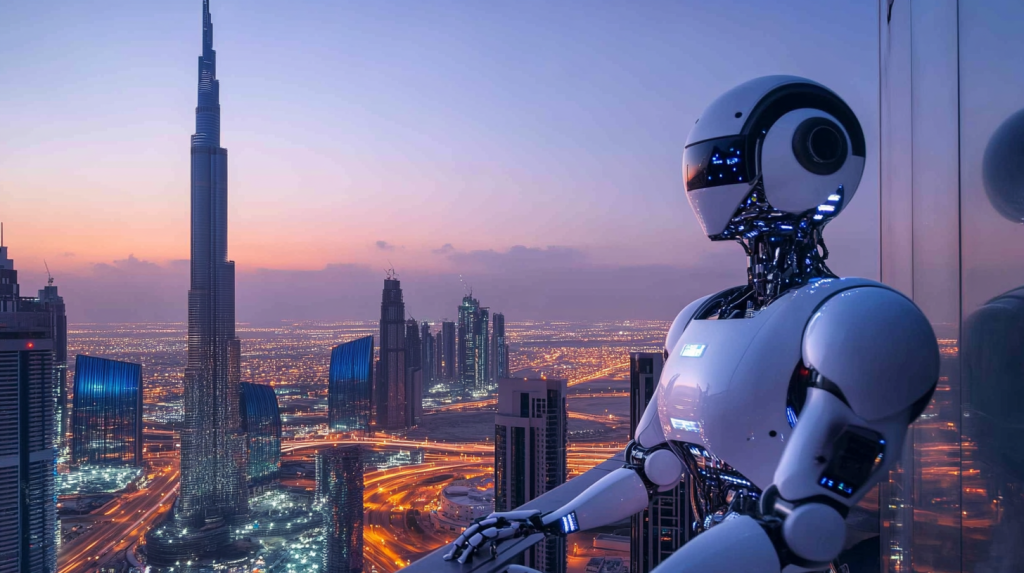
Dubai is rapidly advancing its Artificial Intelligence Strategy 2030 through a series of targeted smart city projects. The Roads and Transport Authority (RTA) has expanded its Smart Pedestrian Signal System to 27 locations using AI and thermal cameras to detect pedestrian movement, improving safety and signal responsiveness, especially for seniors and children. In public transit, the Automated Rail Infrastructure Inspection System (ARIIS) uses AI-powered robots with 3D imaging, LiDAR, and sensors to reduce metro inspection times by 70% from 2,400 man-hours to 700 without disrupting daily operations.
Additional AI implementations include autonomous luggage tractors being tested at Al Maktoum International Airport to streamline baggage handling and reduce human workload. The RTA is also using AI to monitor passenger violations on the metro, particularly targeting unauthorized access to female-only and Gold Class cabins. Aerial drones are being trialed for cleaning metro and tram stations, minimizing manual labor and allowing for high-reach maintenance. Meanwhile, Dubai Police has introduced AI in crime prediction systems, traffic flow analysis, and smart patrol vehicles equipped with facial recognition and license plate readers.
At the federal level, the UAE government’s 2031 strategy integrates AI across 38 federal entities, focusing on resource optimization, financial efficiency, and rapid service delivery. The new planning cycle, shortened from five to three years, enables quicker adaptation to technological change. These efforts align with national initiatives like the UAE Council for Artificial Intelligence and the UAE Coders Programme, positioning Dubai as a regional leader in AI-driven governance, infrastructure, and public service innovation.


