

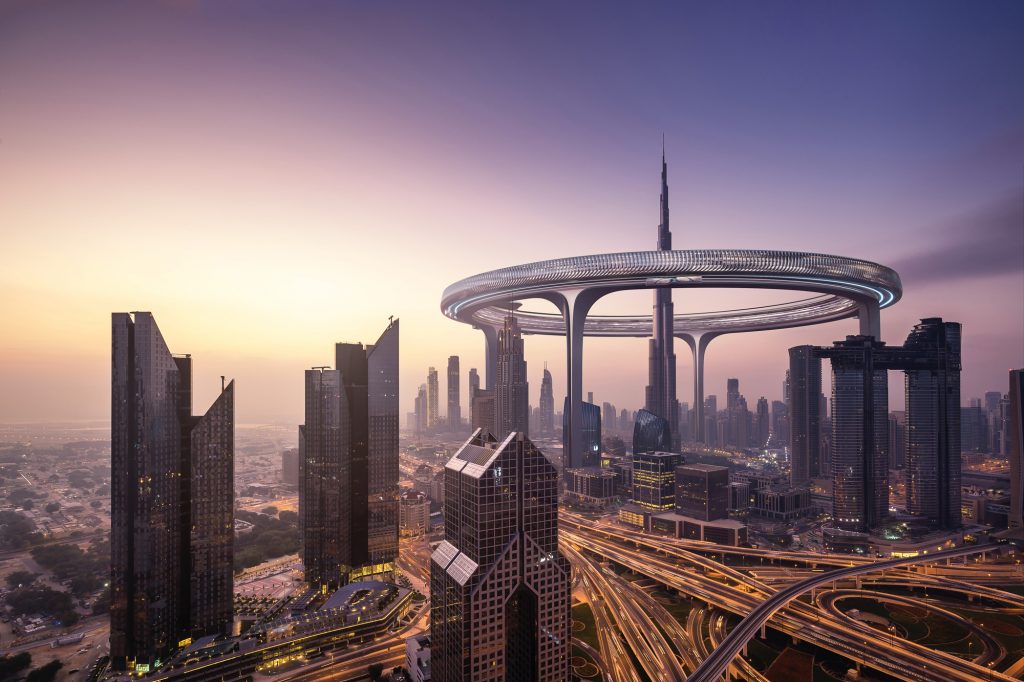
Dubai is set to undergo a dramatic transformation by 2040, with major advancements in transportation, infrastructure, and sustainability. The city’s metro network will expand to 140 stations, covering over 228 square kilometers, including the Dubai Metro Blue Line, which will integrate with existing routes. Innovations like biometric palm payments and electric transport pods are also in development, making commuting in Dubai more efficient and futuristic.
Flying taxis are expected to take flight as early as 2026, offering a fast and affordable alternative to traditional transport. Meanwhile, Palm Jebel Ali will become a thriving destination with over 80 hotels, resorts, and entertainment venues, further reshaping Dubai’s coastline. Environmental initiatives will also play a key role, with mangrove forests and coastal greenery introduced to promote sustainability and combat erosion.
Dubai’s global connectivity will expand with the Al Maktoum International Airport, set to replace DXB as the city’s primary hub. The much-anticipated Etihad Rail passenger service will connect Dubai to Abu Dhabi and Fujairah, reducing travel time across the UAE. The city will also welcome Therme Dubai, the world’s tallest wellness resort, featuring an indoor botanical garden, interactive park, and cascading waterfalls, redefining luxury and leisure by 2028.


